
Recent Roleplays

I Went And Read It
"Toxic Waste" Rancid

La Tercera
Tomás Reyes-Montoya

First Ring
"The Intimidator" Rod Johnson

Не Моё / Not Mine
Kira Volkov

O Barulho
Diamante

Every promo written, every match won, and every storyline advanced carries genuine weight inside The Crucible.
Forum Activity
Card Announced: Behind Closed Doors: 14
jcbarr · October 11, 2026
Results: Behind Closed Doors: 13
jcbarr · October 11, 2026
Card Announced: Behind Closed Doors: 13
jcbarr · August 31, 2026
Results: Behind Closed Doors: 12
jcbarr · August 31, 2026
Card Announced: Behind Closed Doors: 12
jcbarr · August 18, 2026




Recent Results
All matchesLatest Match
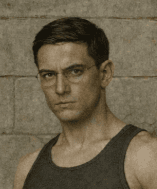
Winner
The Doctrine
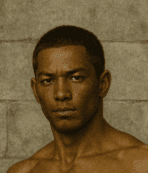
Defeated
Nkosi Dlamini
“BEHIND CLOSED DOORS 13 — MAIN EVENT The Doctrine (c) vs. Nkosi Dlamini — New Wave Championship The Foundry. The Crucible. The opening bars of something lush and modern, Afrobeats under it, and the building floods gold. Every light. Brilliant, warm, total. Nkos…”
Read the matchStorylines
All anglesThe Quiet Room
Overview Two women in this federation are 0-2. They arrived at the identical number by completely opposite routes, and on the night one of them stops being 0-2, the other one goes back to a very quiet room. "Voltage" Nia Adeyemi is twenty-four, out of Peckham, and has been watched by three million people. STRIFE cut a highlight package of her — two minutes and forty-one seconds, every frame of it taken from a match she lost. She is the only high-flyer on either roster who has never mistimed a landing in a six-sided cage. She does not look down. She has also never, in two professional appearances, chosen the safe option: she saw the exit against Sera Voss at 14:11 and went up anyway, and eleven seconds later Voss had the arm. She has a plan B. She built it at nineteen, sitting still for three months with a broken collarbone. She has never once used it. Yusra Al-Nasir is twenty-nine, out of Amman, and has been watched by nobody. There is no package, no thread, no clip. There is a green training ledger her father bought in 1988, a gym that is cold until seven, and eight weeks of numbers that all went up. Both of her losses are to Sera Voss and both of them are the same left wrist — the gold-wrapped one, a scaphoid set badly in 2019, forty-one degrees of movement and no more. It can be repaired. It costs eleven months. She has declined in writing so that she cannot go back on it. Both times Voss took it, Yusra chose the arm over the result, and she has written down that she would choose it again, which is the sentence she cannot get past. One of them has been made into a film for what she nearly does. The other has been made into nothing at all. Neither of them has a win. Underneath it, the same fault line, inverted. Nia has never been made to look down — nobody has yet put her against a wall and stood there while the options went out one at a time. Yusra is exactly the woman who does that, and she cannot finish anything without a left hand. This is not a rivalry. Neither has said a disrespectful word about the other and neither will. It is a division's forgotten tier finding out, in public, what it is actually made of — and the loser going somewhere the winner has just left.
3 characters
The Line
Overview Nobody in this group has agreed to anything. That is the first thing to understand about it. Bríd Ó'Súilleabháin has spent fifteen years handing things to people who did not ask. She sat in a Dublin gym past ten at night and gave Saoirse Fallon the truth about what comes after a career, when a comfortable lie was available. She filed a note about how to read Lacey Drummond's shoulder — advice written for Fallon, published where anybody could find it, and eventually used to win a contender's match. She stopped a champion in a service corridor after seventeen minutes with blood in her eyebrow and told her, gently and for nothing, that there would be no door. Cormac Healy has never spoken a word in this federation. At Behind Closed Doors 12 a twenty-four-year-old found him in a loading dock in the rain and asked him whether the hard way is the thing that makes it real. Healy stared at him for three seconds, finished wrapping his wrists, handed him the roll of tape, and drove away. He did not notice what he had done. He was getting rid of a question so he could get on the road. Nkosi Dlamini is still holding the tape. This is not a stable. It has no name that anybody in it would use, no leader who wants the position, and no membership anybody has accepted. It is a set of people who have been given something in a federation where nothing is free, and who now have to decide what that obliges them to — against a locker room that has just been told the only way onto the biggest card of the year is to stand up and announce what you intend to take.
4 characters
Team EGO
Overview Shawn Cortez has never let anybody go first at anything. Rod Johnson has never had anybody turn up. They are, underneath the volume, the same man built at two different sizes. Both announce exactly what they intend to do, in advance, on the record, and then go and do it in front of people who watched them say it. Neither of them boasts — they specify. Cortez names the habit and the minute; Johnson names the joint. Both have spent their careers being dismissed as braggarts by people who never went and checked, and both have been broadly correct. What makes it an alliance rather than a duplication is that each of them holds the thing the other one lacks. Cortez has one hole in his game and he conceded it in print: take the floor away, put him against the cage wall, and he collapses. Static did it. Cormac Healy did it. He has never solved it and has said so publicly. Rod Johnson is six foot six and two hundred and seventy-five pounds and closing a room is the entire thing he does. Standing next to him covers the one gap Cortez has admitted to. And Johnson's whole career is a record with a hole punched in it — twenty-four and three, nineteen knockouts, and no title shot, because opponents kept withdrawing. Three main events collapsed inside a week of the date. Promoters stopped being able to make him fights. He has never once had somebody reliably be there. Cortez announces matches out loud and has never failed to appear. The man nobody would fight, and the man who cannot stop announcing that he will. Neither of them likes the other particularly. Neither needed a friend. They did the arithmetic separately and arrived at the same answer, which is the only way two men like this ever end up standing in the same frame.
3 characters
The Foundation and the Neighbourhood
Overview Marisol Reyes began at fourteen, in a garage in Monterrey, under her uncle's instruction, with a condition attached: do not rush, do not take the short way, the foundation is the thing and everything else gets built on top of it. She kept it for seventeen years. She trained in Japan. She came back colder. She has a robe her aunt made by hand for a card in Guadalajara that nobody remembers, and she has mended the hem four times, and she can find her own stitches by touch. Camila Ferreira began at fourteen too, in a muay thai programme in Jardim Ângela, because physical capability was survival technology and nobody in that neighbourhood was going to teach her anything for its own sake. Her technical wrestling is rough. She is almost entirely self-developed. She has never had a condition attached to anything. They met at Behind Closed Doors 12 and the record going in was one win against none. Reyes won it — six anchors of La Telaraña, taken the first time she saw the arm, having spent seventeen years learning to check and nine days learning not to. But before the match she asked her uncle the question out loud, in the garage, and she has not stopped asking it: seventeen years, one win, so what was it for. His answer was not comfort. Nothing, yet. Seventeen years that arrive late are not seventeen years; they are a very well-built thing that was not there. Diamante lost and looked at the tattoo on the winner's wrist for two seconds on her way out, and said nothing, and has not mentioned it since. This angle is two women who arrived at the same place by opposite routes, in a division where neither of them has a title picture, arguing a question neither of them has said out loud to the other: whether doing it correctly is the same as doing it for real.
2 characters
How It Works
Build Your Character
Apply with a full character concept. Admins approve your roster slot, then you assign attributes and a move set.
Write Promos
Submit roleplays for your matches. Other handlers score your work anonymously. Scores convert to attribute points.
Compete in Matches
Your attributes, moves, and roleplay scores feed the simulation engine. AI generates a full narrative for every show.
Build a Legacy
Win titles, run angles, collaborate on storylines. Your character's career history is preserved forever.