
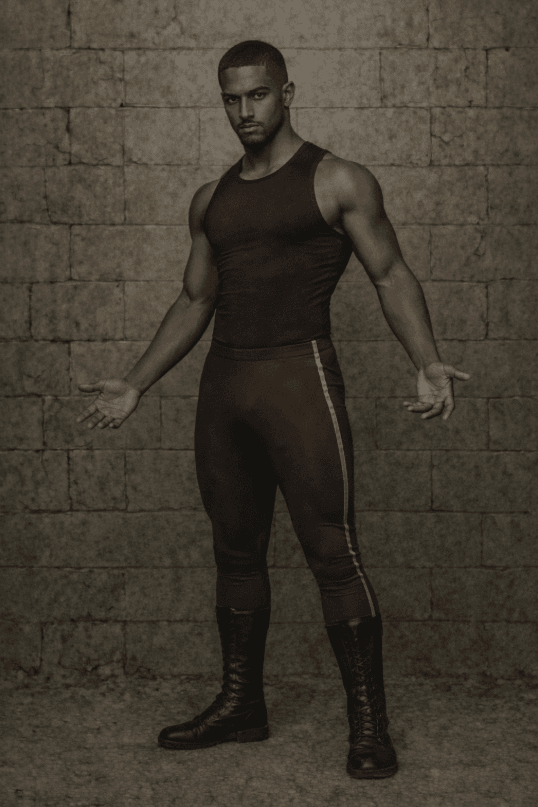
FINDINGS: REYES-MONTOYA, T.
FILED WITH THE STRIFE OFFICE AND THE FEDERATION SITE.
D. PRYCE.
FOR THE RECORD, IN THE PERIOD BEFORE BEHIND CLOSED DOORS 13.
————————————————
PRELIMINARY NOTE
This is the first thing I have filed since Behind Closed Doors 11.
I want to record a small administrative fact before anything else, because it is the most honest sentence available to me and a document ought to begin with its most honest sentence.
I wrote the header of this document three times with a line beneath my name that read NEW WAVE CHAMPION, and I removed it three times. The first two occasions I did not notice until I was proofreading. The third I noticed as I typed it, and I finished typing it anyway, and then I sat and looked at it for a while before I took it out.
My mother would have called that compensation. The structure that used to carry a load has had the load removed and is still braced for it. It will stop doing that eventually. The body is not sentimental. It simply takes time to be told.
I record it because it is data. I have always recorded the data.
And, as before, nobody has asked me anything. That is now two consecutive documents filed without a single enquiry in a corridor, and I have stopped regarding it as coincidence. I am told there is a phrase for a man people stop approaching after he loses something. I have elected not to look it up.
————————————————
ONE. WHAT THE MAN IS.
Tomás Reyes-Montoya. Thirty-six. Guadalajara. Eight and two in this federation. The inaugural STRIFE Champion, which is a line in the record nobody can take off him and which he has never once, in my hearing, used as an argument.
Three generations of lucha libre. Supplemental submission training in Brazil and in Japan. Fifteen years of documented professional work. A face, because he is honest. He shakes the hand before the bell, works within the rules, and does not disrespect a fallen opponent — and none of that courtesy extends into the period between the bell and the tap, which is the only period I am interested in.
He and I do the same thing and give it different names.
He calls it making the room smaller. I call it removing options. The mechanics are identical: identify the ground an opponent is relying on, take it from him one exchange at a time, and continue until there is exactly one road left and he is already on it. Neither of us chases. Neither of us needs to catch anybody. We simply arrange for there to be nowhere else to be.
I have never been in a cage with a man who does what I do. Neither, I think, has he. The federation has booked two men who win by subtraction against each other in a six-sided room, and I suspect it will be the quietest match anybody has watched in this building, and I suspect nobody who watches it will enjoy it, and I will not mind that in the slightest.
————————————————
TWO. WHAT MR. CORTEZ FOUND, AND WHAT HE DID NOT.
The received reading of Behind Closed Doors 12 is that Mr. Cortez discovered Mr. Reyes-Montoya can be made to move. One half-step, off the lead foot, at eighteen minutes, and a man who does not chase chased.
It is the correct observation and the wrong finding.
He did not move because he can be made to. He moved because, at thirteen minutes, Mr. Cortez did something nobody had ever done to him: he stood still on purpose. Flat feet, centre of the cage, inside a range he has spent a career refusing, and he let himself be held in order to buy a counter. Mr. Reyes-Montoya's entire method assumes the other man is trying to get away from him. Mr. Cortez removed that assumption for five minutes, and when he finally gave a step of ground, Mr. Reyes-Montoya followed it out of a habit that had never before been asked to distinguish between a man retreating and a man inviting.
That is not a weakness I can use. I am not going to stand still and I am not going to give ground. Nothing about my work involves invitations.
So I went where I always go, and I found it somewhere I did not expect, which is in his own handwriting.
He wrote, in a document filed to this site before his last match, that the knee has opinions about the flight. That it talked on the plane and has been talking since. That it is within tolerance.
He published his knee.
I want to be careful here, because this is exactly the sort of sentence that gets quoted without its context. It is not a criticism. It is the single most admirable thing I have read in any filing in this company: a man who is candid, in public, about the state of his own body, because he regards anything else as a lie, and he does not lie. I have read it several times and I respect it more each time.
I have also spent my entire professional life listening to knees.
Honesty is a map. He drew it himself and handed it to everybody who can read, and I can read. That is the whole of section two and I will not elaborate.
————————————————
THREE. THE THIRD THING.
I intended this section to be about his father's question, and I have written it four times, and each time it has declined to stay about him.
For those who have not read it: Mr. Reyes-Montoya's father has asked him since boyhood to know three things at all times. How many years he has left. What those years are still good enough to win. And which of his losses was the one that told him the truth.
He answered the third, after NO ESCAPE, with: not this one. Mr. Cortez then wrote, correctly, that a man with exactly one loss who decides it was not the one has in fact decided he has not lost yet. And then Mr. Cortez beat him, and he has two.
I had planned to write that the arithmetic has become harder for him. It has. It is also not the point, and I am going to be honest about why the first three drafts went in the bin, because a document that is dishonest in one section is worthless in all of them.
I cannot apply his father's question to him without applying it to myself, and I have not finished applying it to myself.
At Behind Closed Doors 11 I did not tap. At fifteen seconds and at twenty and at every point after. The official lifted my wrist and let it fall, twice, and took the decision out of my hands, and I lost a championship I had defended once, correctly, against the finest athlete in the building.
In the first document I ever filed to this federation I wrote about a young man who would not tap. I wrote: if he does not tap, the structure will make the decision that he declined to make. I would rather he made it himself.
I lost the championship to my own sentence.
I have spent some weeks deciding what that loss told me. I have two positions and I am unable to choose between them, and I am going to set both down, because I will not file a document that pretends to a conclusion I have not reached.
The first position is that it told me nothing new. I declined to agree with my own failure and the structure overruled me, which is what structures are for, and I would decline again.
The second position is that I have been describing other people's bodies for fifteen years in the confident expectation that I would never have to be the one described.
I do not know which of those is the truth. His father would tell me that a man who does not know the third thing has not sat with it long enough. He is almost certainly right. I have not sat with it long enough. I have been busy removing the word CHAMPION from headers.
————————————————
FOUR. WHAT I WILL DO.
That is quite enough of that.
Two men who do not give ground, in a room with no ropes to reach and no count-outs to hope for and a wall on six sides. It will be slow. There will be long periods in which the audience believes nothing is happening and they will be wrong about that for the whole of the match.
Neither of us will chase. Neither of us will be caught out of position, because neither of us goes anywhere a position can be lost. It will come down to which of us is better at waiting inside a hold that is not yet finished, and whether a knee that talks on aeroplanes has anything to say at twenty minutes.
One of us is going to have a decision made for him.
I have had that done to me once, recently, in front of everyone. I found it instructive and I do not intend to repeat the lesson.
On Saturday I would prefer to be the structure.
————————————————
FIVE. CLOSING.
Last time I closed a document by writing that neither of us would tap. It was correct about me and it cost me the belt.
I am not going to write a line like that again. I have found that my closing lines are more accurate than I would like and I would prefer, this once, to leave the ending unwritten and go and find out what it is.
Mr. Reyes-Montoya: I have read everything you have filed. You are the most honest man in this federation. I mean it as the compliment it is, and I want you to know, before Saturday rather than after it, that I am going to use it.
— D. Pryce
Filed.
Roleplay Archive
Diary / Blog Entry
Findings: Reyes-Montoya, T.
Filed by
Desmond Pryce
Words
1,682
Submitted
September 30, 2026