"The Intimidator" Rod Johnson
Handler: jcbarr
1
Wins
0
Losses
0
Draws
Biography
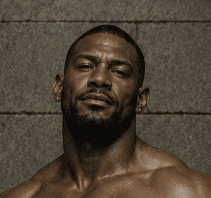
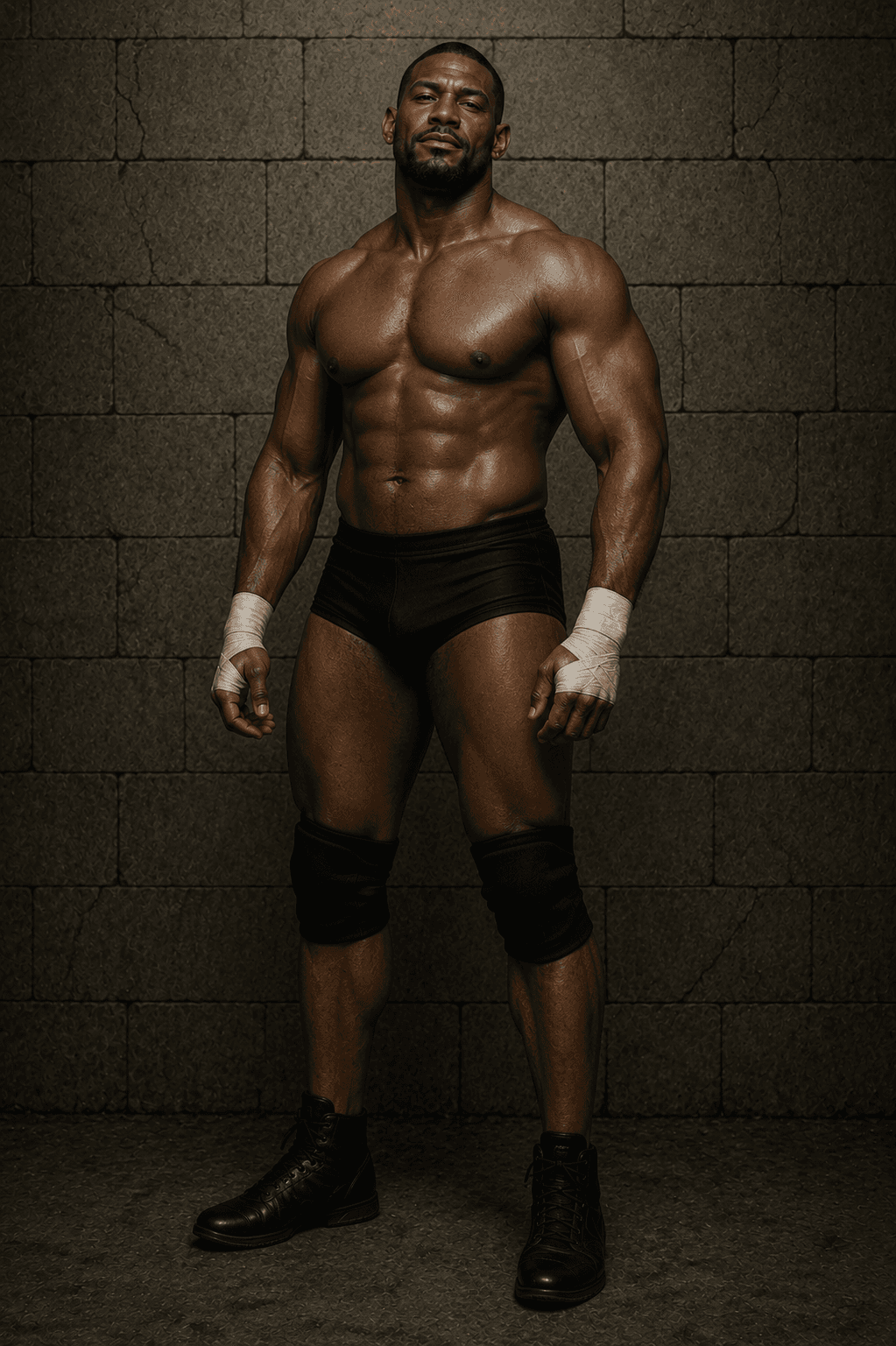
Rod Johnson tells you what he is going to do to you, at volume, in front of everybody, and then he goes and does it. There is no second layer to him and he would like that understood immediately. He is not mysterious, he is not conflicted, and he has never once in his professional life been accused of being subtle. What makes him difficult is not that he threatens. Half this roster threatens. What makes him difficult is that his threats are specific. He does not say he will destroy you. He says which joint is going to go, and which of your habits is going to hand it to him, and roughly what minute it will happen in — and then the tape gets checked afterwards and the man was broadly correct. He has been doing this since college and he has been right often enough that opponents have stopped treating it as noise. He is a powerhouse who can actually wrestle, which is the rarest thing in the archetype and the reason he is a problem. Six foot six, two hundred and seventy-five pounds, and an NCAA Division I heavyweight champion — the size is what people see and the mat work is what beats them. He does not swing wildly. He closes, takes hold of you, and reduces the fight to a surface area you cannot get off. He is a heel and an unapologetic one, but he does not lie, does not cheat that anyone has ever proved, and has never disrespected a fallen opponent. He will tell a man he intends to end his year and mean it as a professional courtesy. He genuinely believes the warning is a kindness, and he is honestly offended when it is received as disrespect. His Crucible problem is the hex. Six corners means six angles, and six angles means a smaller, faster opponent has more places to go than they would in a four-sided ring. His entire night is reducing a six-sided room to a two-sided one. Anyone who can keep the geometry open survives him for a long time. Anyone who lets him close it is finished. The lower two-thirds of padded wall, with nothing to reach and nothing to enforce, was built for a man exactly his size and he is aware of it. There are stories about Rod Johnson in gyms across three states. He has never addressed a single one of them, and when asked he gives the same answer he has given for a decade — that nothing about him is a rumour, everything about him is a record, and the record is public if anybody would like to go and read it.
Attributes
Affects damage output of power-based moves
Affects speed, evasion, and aerial move effectiveness
Affects performance degradation over match length
Affects crowd interaction and promo-based match modifiers
Affects bonus multipliers from pre-match roleplay scoring
Affects match pacing decisions and comeback mechanics
Affects damage received from physical strikes and slams
Passive reduction of damage from counter-able move types
Passive reduction of effectiveness of submission holds
Move List
Finisher
Backup Finisher
Signature Moves
Class Moves
Universal Moves
Basic Moves
Career
Championships
No title reigns yet.
Entrance
The house lights come up, not down. Full white, everything visible, the audience lit as brightly as the ramp. He is the only entrance in this federation that refuses darkness, and it is deliberate — there is nothing about him to obscure and he would like that demonstrated before he has thrown a punch. The music is brass. A slow, heavy horn arrangement over a marching low end, deliberately old-fashioned, the sort of thing a heavyweight walked out to sixty years ago. It does not build and it does not drop. It simply proceeds, at the pace he is walking, until he is where he intends to be. Rod Johnson walks to the cage without hurrying and talks the entire way — loudly, to whoever happens to be nearest. The front row. The hard camera. A child holding a sign. A member of the ring crew who did not ask. He is not insulting any of them. He is telling them, at conversational content and thoroughly unconversational volume, exactly what is about to happen inside and approximately when, and the unpleasant part is how pleasant he is about it. At the door he stops, turns, and says one thing directly to the hard camera. It is different every night. It is always specific and it is always about his opponent's body. Inside, he does not pose. He goes to a corner, sets his feet against the base of the cage wall and pushes against it once — testing the give of the padding, the way a man tests a floor before he puts weight on it. Then he walks to the centre of the hex and waits with his hands loose at his sides. The crowd boos him and he raises both arms slowly to take more of it, smiling the whole time, and the boos always get quieter rather than louder.
Backstory
Kansas City, Missouri. He came up through a wrestling program at a public high school that produced almost nothing else, and he was the reason the program stayed funded — two-time state champion at heavyweight, undefeated across his last two seasons, recruited hard and early. He went Division I and became a three-time All-American and a national champion at heavyweight in his senior year. The tape from that run is still circulated in college rooms, not because it is beautiful but because it is instructive: a man that size is not supposed to have hands that good. He turned professional in mixed martial arts at twenty-three and put together a record of twenty-four wins and three losses across nine years — nineteen of the wins by knockout, the rest by ground-and-pound stoppage. He never once fought for a title. The reason he never fought for a title is the only genuinely strange thing in an otherwise ordinary résumé, and it is a matter of public record: opponents kept withdrawing. Three separate main-event bookings collapsed inside a week of the date. Two of the withdrawals were attributed to injury and one was never explained at all. By the last three years of his run, promoters were having active difficulty making him fights, and he was routinely offered less money to face worse opponents on shorter notice than men he had already beaten. He took the fights anyway. He won them. Nobody ever gave him a straight answer. He came to professional wrestling at thirty-two, worked the American regional circuit for two years without ever taking a booking that required him to pretend anything, and then STRIFE opened. He has said, publicly and repeatedly, that STRIFE is the first honest room anyone has offered him since college — no count-outs, no walking away, no door to be politely escorted through the moment a promoter decides the fight has become inconvenient. He does not talk about the federation reverently. He talks about it like a man who has finally found a building where the exits are locked, and who considers that an amenity. Married once, briefly, in his twenties. No children he discusses. Trains alone and has done for a decade. ON THE MICROPHONE — He is loud and he is never vague, and the second half of that sentence is the character. He does not trade in general menace. He names the joint, names the habit that is going to surrender it, and estimates the minute. He does not insult opponents and has been known to compliment a man sincerely inside the same sentence in which he describes taking his knee apart; he sees no contradiction there and there is not one. CATCHPHRASES — "I'm going to say this once, and I'm going to say it loud, so nobody has to ask me twice." / "You already know." / "Ain't nothing about me is a rumour. Everything about me is a record. Go and read it."
Gallery