Pagan DuHast
Handler: jcbarr
3
Wins
2
Losses
0
Draws
Biography
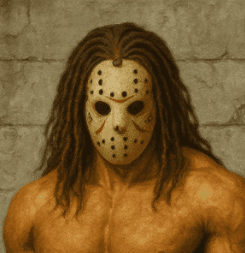
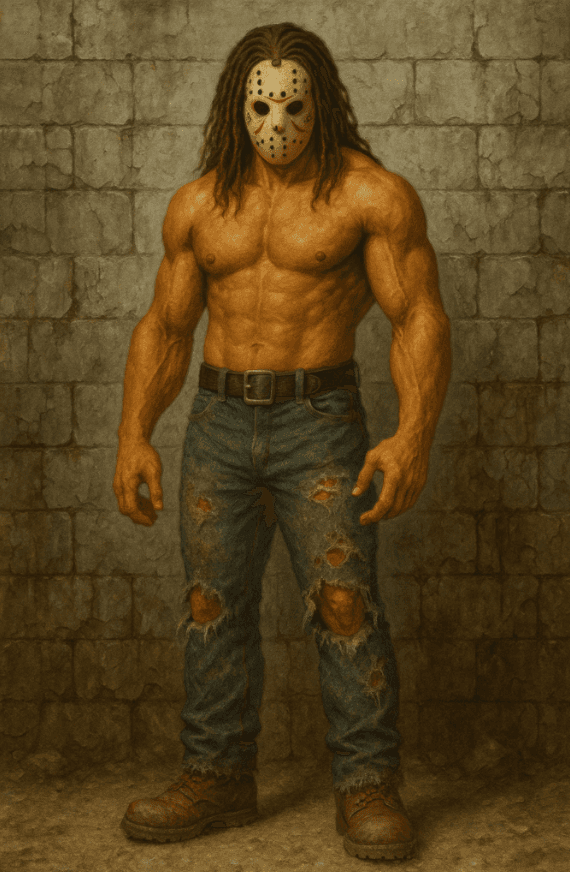
No one really knows where Pagan DuHast came from—and that’s exactly how he wants it. The name itself isn’t believed to be real. It surfaced years ago in whispers across independent circuits in Eastern Europe and rural American promotions—attached to stories of a massive, masked man who didn’t wrestle matches so much as end them. Promoters who booked him would receive no contract negotiations, no travel requests—just a time, a place, and eventually… he would show up. And when he did, things changed. Matches involving Pagan rarely followed structure. Opponents often left the ring injured—sometimes seriously—after enduring a style that blurred the line between performance and something far more dangerous. Referees learned quickly not to interfere. Some didn’t come back after trying. Rumors began to build. Some say he was once part of a private underground fighting circuit where identity was stripped and replaced with personas—where losing meant more than just defeat. Others claim he was a former enforcer for organized crime, his identity buried after a job went too far. The most unsettling stories suggest he was never fully “trained” at all—that he was simply pointed at a ring and allowed to do what came naturally. What is known is this: Pagan does not speak. Not in promos. Not backstage. Not to officials. The mask never comes off in public, and anyone who’s tried to remove it has regretted it instantly. He doesn’t play to the crowd. He doesn’t acknowledge cheers or boos. The audience isn’t part of his world. The ring is. And inside it, Pagan DuHast isn’t performing. He’s hunting.
Attributes
Affects damage output of power-based moves
Affects speed, evasion, and aerial move effectiveness
Affects performance degradation over match length
Affects crowd interaction and promo-based match modifiers
Affects bonus multipliers from pre-match roleplay scoring
Affects match pacing decisions and comeback mechanics
Affects damage received from physical strikes and slams
Passive reduction of damage from counter-able move types
Passive reduction of effectiveness of submission holds
Move List
Finisher
Backup Finisher
Signature Moves
Class Moves
Universal Moves
Basic Moves
Career
Championships
No title reigns yet.
Match History
Diamante vs. The Office's Answer
singles · July 30, 2026
Pagan DuHast vs. Cormac 'The Butcher' Healy
singles · June 4, 2026
Dorian Graves vs. Pagan DuHast
singles · May 30, 2026
Pagan DuHast vs. Callum 'The Cut' McCready
singles · May 1, 2026
STRIFE Championship Tournament — Round 1
singles · April 17, 2026
Entrance
🎵 Entrance Theme: “Du Hast” – Rammstein (Edited Intro Loop) The track opens with a low, industrial hum and metallic echo The iconic “Du… Du Hast…” chant is stretched and slowed slightly for tension Heavy bass kicks in ONLY once he’s already visible This isn’t a hype entrance—it’s a warning siren 🎬 Ring Entrance: Pagan DuHast Arena Lights: The arena abruptly drops to near-total darkness. Not a smooth fade—more like the power cut out. A low industrial hum begins. Graves (low, almost reverent): "…and now… something far beyond competition." Cassidy (uneasy): "I don’t like this… something feels wrong…" 🔊 Stage Effect A single, dim overhead spotlight flickers on at the entrance ramp. He’s already there. No pyro. No music hit cue. Just… standing. Head slightly tilted downward. Arms hanging loose. Not moving. 🎵 Theme Kicks In “DU…” He slowly raises his head. “DU HAST…” He takes his first step forward—heavy, deliberate. Each step syncs with the beat like a hammer hitting steel.
Backstory
No one really knows where Pagan DuHast came from—and that’s exactly how he wants it. The name itself isn’t believed to be real. It surfaced years ago in whispers across independent circuits in Eastern Europe and rural American promotions—attached to stories of a massive, masked man who didn’t wrestle matches so much as end them. Promoters who booked him would receive no contract negotiations, no travel requests—just a time, a place, and eventually… he would show up. And when he did, things changed. Matches involving Pagan rarely followed structure. Opponents often left the ring injured—sometimes seriously—after enduring a style that blurred the line between performance and something far more dangerous. Referees learned quickly not to interfere. Some didn’t come back after trying. Rumors began to build. Some say he was once part of a private underground fighting circuit where identity was stripped and replaced with personas—where losing meant more than just defeat. Others claim he was a former enforcer for organized crime, his identity buried after a job went too far. The most unsettling stories suggest he was never fully “trained” at all—that he was simply pointed at a ring and allowed to do what came naturally. What is known is this: Pagan does not speak. Not in promos. Not backstage. Not to officials. The mask never comes off in public, and anyone who’s tried to remove it has regretted it instantly. He doesn’t play to the crowd. He doesn’t acknowledge cheers or boos. The audience isn’t part of his world. The ring is. And inside it, Pagan DuHast isn’t performing. He’s hunting.
Gallery