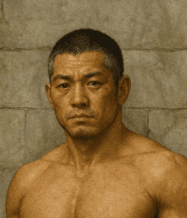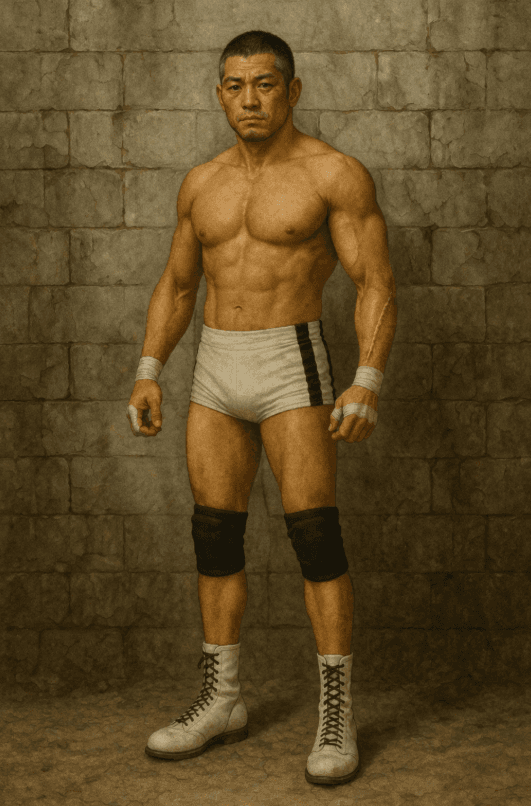
Hideo Kuramoto
Handler: jcbarr
5
Wins
3
Losses
0
Draws
Biography
Hideo Kuramoto has been in the wrestling business for twenty-three years. He is the only person in STRIFE who can say that with both honesty and precision, because Kuramoto does not approximate — he knows exactly how long he has done this, exactly how many matches he has worked, and exactly which of them he is dissatisfied with. He is broadly respected even by the heels — the working kind of respect that combatants develop for someone whose craft they cannot reasonably question. He operates as a tweener because his allegiances are entirely internal: he is loyal to good work, to honest competition, and to the standards he set for himself at nineteen years old. He will call out a sloppy opponent publicly. He will also go twenty minutes with a green rookie and make them look better than they are, because that is what professionalism requires.
Attributes
Affects damage output of power-based moves
Affects speed, evasion, and aerial move effectiveness
Affects performance degradation over match length
Affects crowd interaction and promo-based match modifiers
Affects bonus multipliers from pre-match roleplay scoring
Affects match pacing decisions and comeback mechanics
Affects damage received from physical strikes and slams
Passive reduction of damage from counter-able move types
Passive reduction of effectiveness of submission holds
Move List
Signature Moves
Class Moves
Universal Moves
Basic Moves
Career
Championships
1 reign · 68 total days held
STRIFE Champion
August 9, 2026 – present
68 days
Match History
Hideo Kuramoto (c) vs. Wone — STRIFE Championship
singles · August 23, 2026
Tomás Reyes-Montoya (c) vs. Hideo Kuramoto — STRIFE Championship
singles · August 9, 2026
Hideo Kuramoto vs. The Doctrine
singles · July 30, 2026
Hideo Kuramoto vs. Dorian Graves
singles · June 20, 2026
Tomás Reyes-Montoya vs. Hideo Kuramoto (Non-Title)
singles · June 4, 2026
Hideo Kuramoto vs. Cormac 'The Butcher' Healy
singles · May 30, 2026
"Simply" Shawn Cortez vs. Hideo Kuramoto
singles · April 30, 2026
STRIFE Championship Tournament — Quarter-Finals
singles · April 22, 2026
Entrance
Traditional Japanese taiko drums play — a specific, short composition that Kuramoto commissioned and has used for nine years. The lights change to a clean, bright white with no theatrical effects. He walks to the ring at a measured pace, bowing briefly to both sides of the crowd as he reaches the ring apron — not performatively, just acknowledgment. He steps through the ropes, moves to the center of the ring, and executes three deliberate stretches: neck roll left, neck roll right, hands clasped behind his back with a forward bow. The crowd receives him with genuine applause, the kind given to someone the audience has decided is trustworthy. He waits in his corner without leaning on the ropes.
Backstory
Kuramoto came through the Japanese dojo system starting at eighteen, trained under a regime that most Western wrestlers would describe as a human rights concern. He does not describe it this way. He describes it as the only honest method he has encountered for producing real wrestlers. He wrestled in Japan for twelve years across several major promotions before spending his mid-thirties working internationally — UK, Mexico, the US independents — developing a versatility and physical adaptability that gives him something rare: a style that translates across every context. His personal crisis came at thirty-eight, when a serious knee injury required reconstructive surgery and a fourteen-month absence. The medical consensus was that his career was functionally over. Kuramoto returned in eleven months, in better physical condition than before the injury. His motivation now is specific: he never won a world championship. Everything else he intended to accomplish in this business, he accomplished. That one absence bothers him in the particular way that only genuine unfinished business can.
Gallery